
The Hidden Substack Growth Feature 99% of Creators Aren’t Using Enough
One well-placed guest post can bring in more new subscribers than months of publishing on your own.

When you only publish on your own Substack publication and never actively put your work in front of other people’s audiences, growth will feel slow and unpredictable.
And that’s the reality for many Substack creators.
They publish consistently, but they stay stuck in their own ecosystem. Their work reaches the people who already know them.
And while that’s valuable, it doesn’t solve the core challenge every creator faces: getting discovered by new readers.
That’s where guest posting comes in.
And despite being one of the most powerful growth strategies available on Substack, most creators either don’t use it at all — or don’t use it nearly enough.
In our first few months on Substack, guest posting played a key role in driving new subscribers to our publication.
With just a few strategic guest posts on publications with thousands of subscribers, we brought hundreds of new subscribers in a short period of time, kickstarting our growth.
In this post, we’re going to break down exactly how guest posting works, how to land guest post opportunities (even if you have a small audience), and how to make sure every guest post you write actually leads to real growth.
Let’s get into it.
Why Guest Posting Is So Powerful
The idea behind guest posting is pretty straightforward.
You write a post for someone else’s Substack publication, and that post then goes out to all of their subscribers, landing directly in their email inboxes.
In contrast, when you publish on your own Substack, your posts reach your existing audience. The people who already know you, already trust you, and already subscribe to your work.
That’s great, but it doesn’t bring in new readers.
And on Substack, unlike social media platforms, there’s no real algorithm pushing your long-form posts in front of people outside of your existing ecosystem.
(Every now and then, a long-form post can get traction outside of your existing audience, but it’s quite rare and hard to predict.)
So, if you only ever publish on your own publication, you’re essentially writing in a room full of people who already know who you are.
Guest posting breaks you out of that room entirely.
When your work appears on someone else’s publication, you’re not just getting a mention or a shoutout.
You’re getting your ideas, your insights, and your writing delivered directly into the email inboxes of their subscribers.
People who have never heard of you before are now reading your work, and if it resonates, a portion of them will come looking for more. They’ll click through to your publication and subscribe.
What makes guest posting even more powerful is that Substack has deliberately designed the feature to optimize for exactly that outcome.
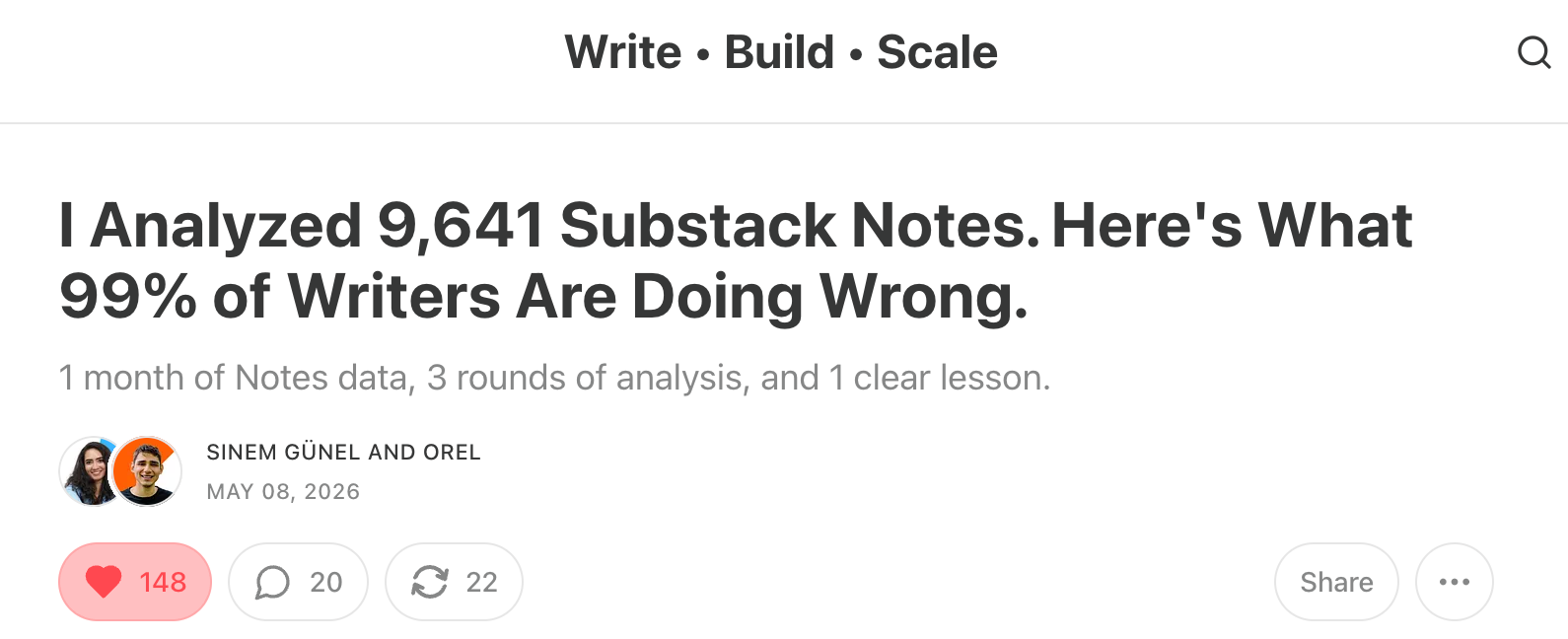
When you contribute a guest post, you’re automatically added as a contributor to the post, with your profile clearly attached to the post.
For example, Orel recently wrote a guest post for our publication, and you can see that his Substack profile is directly added to the post.
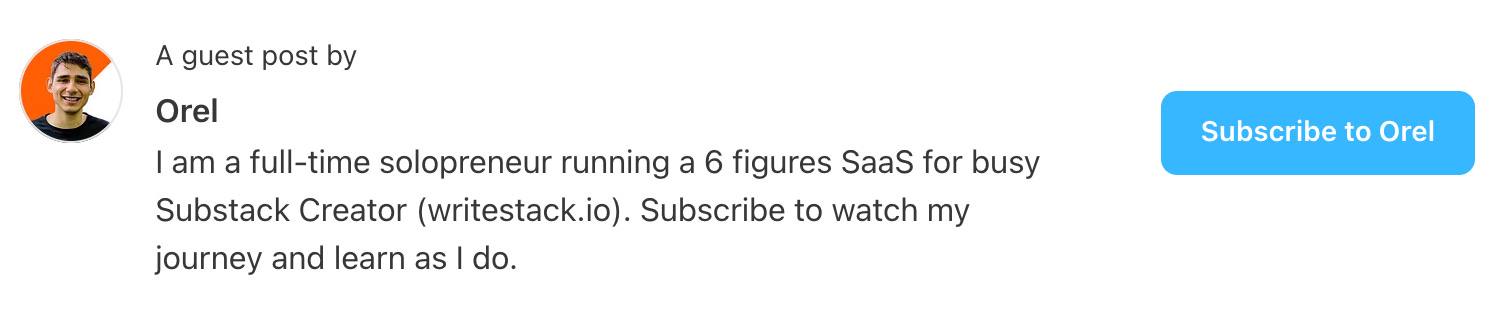
And at the end of the guest post, Substack includes a dedicated call to action encouraging readers to subscribe to Orel’s publication.
So the pathway from “I just read this great post” to “I’m now subscribed to their publication” is built right in. Substack does that work for you.
That’s why guest posting is one of the fastest ways to grow on Substack.
You deliberately and strategically get your work in front of audiences that are already warm, already engaged, and already in the habit of reading newsletters.
How to Land Guest Post Opportunities (Even With a Small Audience)
The biggest mistake creators make when trying to land guest posts is going in cold.
Sending a pitch to someone who has never heard of you, with no prior interaction, no relationship, and no context, and expecting them to hand over access to their audience, is a recipe for silence.
Unless you have seriously impressive credentials that speak for themselves, a cold pitch is rarely going to work.
The good news is that building enough of a relationship to make a pitch land well doesn’t take long. Here’s exactly what to do.
Step 1: Build a connection first
Before you pitch anyone, spend a few days engaging genuinely with their work. Restack some of their Notes and leave thoughtful, specific comments on their posts.
The goal is simple: make sure they’ve seen your name and face before you slide into their DMs.
Step 2: Introduce yourself
Once you’ve been on their radar for a few days, send a short DM introducing yourself.
Tell them who you are, what you write about, and give them a specific (and genuine) compliment on their work.
Keep it brief. You’re not pitching yet — you’re just starting a conversation.
Step 3: Pitch with specificity
This is where most creators go wrong. They ask something vague like “Would you be open to a guest post?”
But this puts all the thinking on the other person and makes it easy to say no or simply not respond.
Instead, come in with specific ideas. Something like:
“I’d love to write a guest post for your publication. I think your audience would love any of these three topics — [topic 1], [topic 2], or [topic 3]. Let me know if any of these feel like a good fit, or if you have something else in mind.”
Now you’ve made it easy for someone to say yes. They just have to pick the idea they like best.
Step 4: Make it a no-brainer for them to say yes
You should absolutely be approaching bigger publications than yours to write guest posts for.
Writing a guest post takes real time and effort, so you want to make sure it’s going out to an audience of thousands, not dozens.
If your guest post lands in the inboxes of 10,000 subscribers, the growth potential is completely different from a publication with 200.
But to get a ‘yes’ from a larger publication, you need to make it genuinely worth it for them.
And the way you do that is by bringing something to their publication that they can’t easily create themselves.
This is where the recent guest post Orel wrote for our publication is a great example once more.
Orel is the founder of WriteStack, which means he has access to data on tens of thousands of Substack Notes.
The guest post he wrote for us is titled ‘I Analyzed 9,641 Substack Notes. Here’s What 99% of Writers Are Doing Wrong.’
That’s a post we could never write ourselves, simply because we don’t have access to that data.
In other words, Orel brought a unique angle, a unique area of expertise, and unique insights that were genuinely valuable to our audience, making it a no-brainer for us to say yes.
And that’s exactly the question you want to ask yourself before pitching:
What can I bring to this publication that they genuinely cannot already do themselves?
What unique experience, data, perspective, or expertise do I have that would add real value to their audience, not just more of what they’re already publishing?
When you approach it with that mindset, even some of the biggest Substack publications will say yes to you writing a guest post for them.
And that’s when your subscriber growth skyrockets.
Stop Growing By Yourself
One well-placed guest post on the right publication can bring in more new subscribers than months of publishing on your own.
It’s about working smarter and strategically putting your work in front of audiences that are already primed to love what you do.
So if you’ve been sitting on this strategy, waiting until you feel “ready” or until your publication is bigger — stop waiting.
The best time to start guest posting is now, when your publication is still growing, and every new subscriber genuinely moves the needle.
Start small:
Identify three publications in your space whose audiences overlap with yours
Spend a few days engaging with their work
Send a short DM with a genuine introduction
Then pitch with specificity and bring something unique to the table.
That’s it. That’s the whole playbook.
To make this as easy as possible for you, we’re sharing a word-for-word outreach template you can use to pitch your first — or next — guest post opportunity (exclusively for our premium subscribers).
It’s the exact messaging framework we’d use ourselves, covering how to introduce yourself, how to present your guest post ideas, and how to make it as easy as possible for another creator to say yes.
If you’ve read this far and you’re serious about using guest posting to grow your Substack, this template alone will save you a lot of time and second-guessing.
(If you aren’t a premium member yet, click here to upgrade to unlock this template plus 100+ other exclusive resources to fast-track your Substack growth.)
Access the word-for-word guest posting outreach template right here:
Keep reading with a 7-day free trial
Subscribe to Write • Build • Scale to keep reading this post and get 7 days of free access to the full post archives.