
5 Proven Ways to Build a Bestselling Substack Publication
This is how we gained 600+ paid subscribers.

If you're publishing on Substack but not seeing much growth, there’s probably one of five things going wrong.
This post is for creators who want to grow faster, build a real audience, and stop publishing to crickets.
At Write • Build • Scale, we have built a Bestselling publication with over 600 paid subscribers within a year:
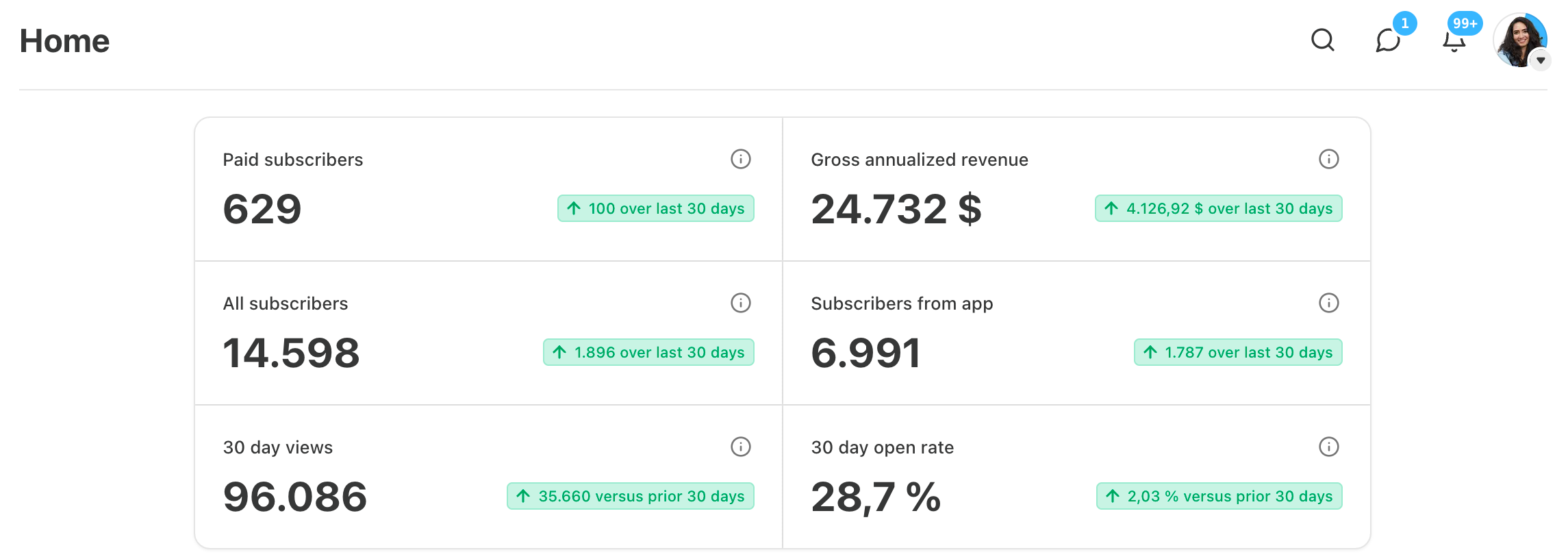
In this post, I'll share the five major shifts that we made and how you can apply the same principles even if you're starting from scratch.
1. You’re Not Clear Enough
I talk about this a lot because it’s one of the most common mistakes:
Most creators confuse their readers because they lack clarity.
They say things like:
“I write about mindset, creativity, and entrepreneurship.”
“I write about life, leadership, and growth.”
This is vague.
It’s not memorable.
And let's be honest, if someone can't easily describe what your work is all about, they will never recommend it to someone else because they are not able to clearly articulate the value.
Instead, you want your Substack publication to pass the “one-sentence test” and quickly answer the following question:
What’s the clear, specific promise someone can repeat when they talk about your work?
Examples:
Health: “Simple daily habits to manage stress and boost energy.”
Fitness: “Training tips for busy professionals over 40.”
Wellness: “Mindful parenting without the guilt.”
Finance: “Personal finance tips for freelancers and creators.”
Writing: “Grow and monetize your audience through online writing.”
The more specific your one-liner, the more memorable and discoverable your publication becomes.
To make this really practical, I challenge you to write the first version of your one-sentence description and share it with us in the comments right away. It doesn't have to be perfect. You can always tweak it in the future. What matters is that you get started and change the way you think about your publication.
One sentence that sums up the specific value you offer through your work on Substack.
Once you’ve got that, add it to your Substack header, your About page, and your welcome email. Make sure it’s the first thing people see when they discover you.
Because if you’re not clear on what your publication is about, your readers won’t be either.
2. You’re Not Creating Enough Entry Points
Most writers post once per week.
And while that might seem like a lot of new content to create, the truth is that this approach only gives you one single entry point for new readers to discover you.
Now compare that to creators who:
Publish Notes daily
Show up in Chat threads
Join collaborative posts
They’re creating 10+ entry points per week, and each of those is a chance to get noticed.
If you want to grow, you need to knock on more doors.
And the fix is simple: start using Substack Notes consistently.
Set aside 30 minutes each weekday to focus on growth.
Use that time to leave thoughtful comments, publish Notes, and start genuine conversations with other creators.
You’ll be surprised how quickly momentum builds when you consistently show up this way.
And if you’re not sure how to get started, here are a few of our most popular resources on Substack Notes:


3. You’re Not Creating Shareable Moments
Most writers write for their subscribers. But if you want to grow, you also need to write for your subscribers’ networks.
People share content when they feel:
Seen
Smarter
Inspired
Helpful to others
Your job is to create those shareable moments.
Here’s how:
Add a powerful takeaway or quotable line to your long-form posts
Share a lesson learned the hard way and let others see themselves in your story
Use visuals or frameworks that others want to bookmark or reuse
Most people would never share a long-form post, but they will share tiny snippets that inspired them.
When I write long-form, I ask myself:
“What’s one line someone would highlight if this were a book?”
So before you hit publish on your next post, take a moment to zoom in.
Ask yourself:
“What’s one part of this piece someone might screenshot, highlight, or forward to a friend?”
When you find that moment, polish it.
Make it clearer, bolder, and more impactful.
You can even turn it into a Note or a visual to extend its reach. That’s how your content spreads—one powerful takeaway at a time.
4. You’re Not Studying What Already Works
Let’s be honest: You don’t have to reinvent the wheel to succeed as a creator.
Substack gives you signals. All you have to do is pay attention.
One of the easiest ways to get better results is to study what’s already working.
Start with a few simple places:
Look at the top publications in your niche. What’s their format? How often do they post? What’s the tone they use?
Check the leaderboards. Who’s getting the most engagement, and what are they actually posting?
Explore active Chat threads. Which ones get tons of replies? How are they phrasing their prompts?
Dive into your recommendation analytics. Who’s sending you subscribers—and is there an opportunity to build a stronger connection with them?
Pick three fast-growing publications in your niche. Spend 15 minutes analyzing what they’re doing well—post formats, publishing rhythm, how they show up in Notes or Chat.
Then choose one idea to adapt or experiment with this week inside your own publication.
Small changes like this can lead to big breakthroughs over time.
5. You’re Quitting Too Soon
Here’s an underrated truth:
Your audience doesn't just expect quality. They also expect quantity and consistency.
You could write the best post in the world, but if it’s only one of three total posts on your Substack, it will be hard to convince a reader to subscribe because they don't know if they'll actually enjoy the rest of your work.
Your readers expect positive signals to trust you and hit that subscribe button. If they can access a large library of valuable resources, they can be much more confident about actually subscribing and engaging with you.
Growth doesn’t happen in one big moment.
It compounds slowly through repetition, momentum, and trust.
And the creators who see the best results are always the ones who show up long enough to actually earn it.
If you’re not giving yourself at least a year to explore, experiment, and improve, you’re cutting yourself short.
Because trust isn't built overnight.
It's earned one Note, one conversation, and one post at a time.
Let’s Recap
If your Substack isn’t growing, it’s not because you’re not good enough.
It’s probably because no one ever showed you how to build momentum on the platform.
Let’s recap the five shifts that will help you grow faster on Substack:
Get crystal clear on your promise. Your publication should pass the one-sentence test so people can easily share what you do with others.
Create more entry points. Don’t rely on one long-form post per week—use Notes, comments, chats, and collaborations to multiply discovery.
Build shareable moments into your content. Include quotable lines, relatable stories, or useful visuals that your audience wants to save and share.
Study what works. Analyze fast-growing publications in your niche and adapt the best elements to your own style.
Stay consistent and patient. Growth compounds for those who keep showing up with quality work, not for those chasing quick wins.
💡 Next: Start writing better Substack Notes.
If you'd like to apply several of those five shifts by leveraging Substack Notes more successfully, check out our newest video with 13 strategies that will help you get the most out of Substack Notes:
Really appreciate you sharing this. Clarity, consistency, and creating those shareable moments have made the biggest difference for me too.
“more entry points”, it’s such an underrated growth driver most creators overlook.
Self-employment readiness, tips, and tricks for introvert entrepreneurs