
The 2026 Substack Notes Playbook: How to Write Notes That Turn Strangers Into Subscribers
What we've learned from publishing 3,000+ Substack Notes


Combined, we’ve published more than 3,000 Notes ever since we started on Substack.
After publishing so many Notes, we can say one thing with confidence:
Notes are an incredible way to reach new people, share your message, build a connection with your audience, and attract new subscribers to your Substack publication.
For example, Orel started writing Notes in March 2025, but has already grown his publication by 1200 new subscribers because of Notes (that’s 150 new subscribers a month).
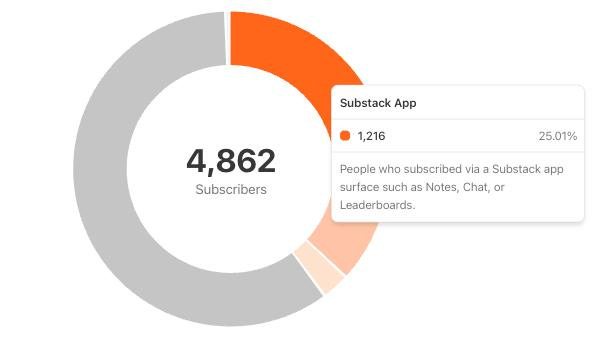
At Write • Build • Scale, we started writing Notes back in the summer of 2024.
Since then, our publication has grown with 11,000+ subscribers directly or indirectly through Substack Notes.
(That’s almost half of our entire audience!)
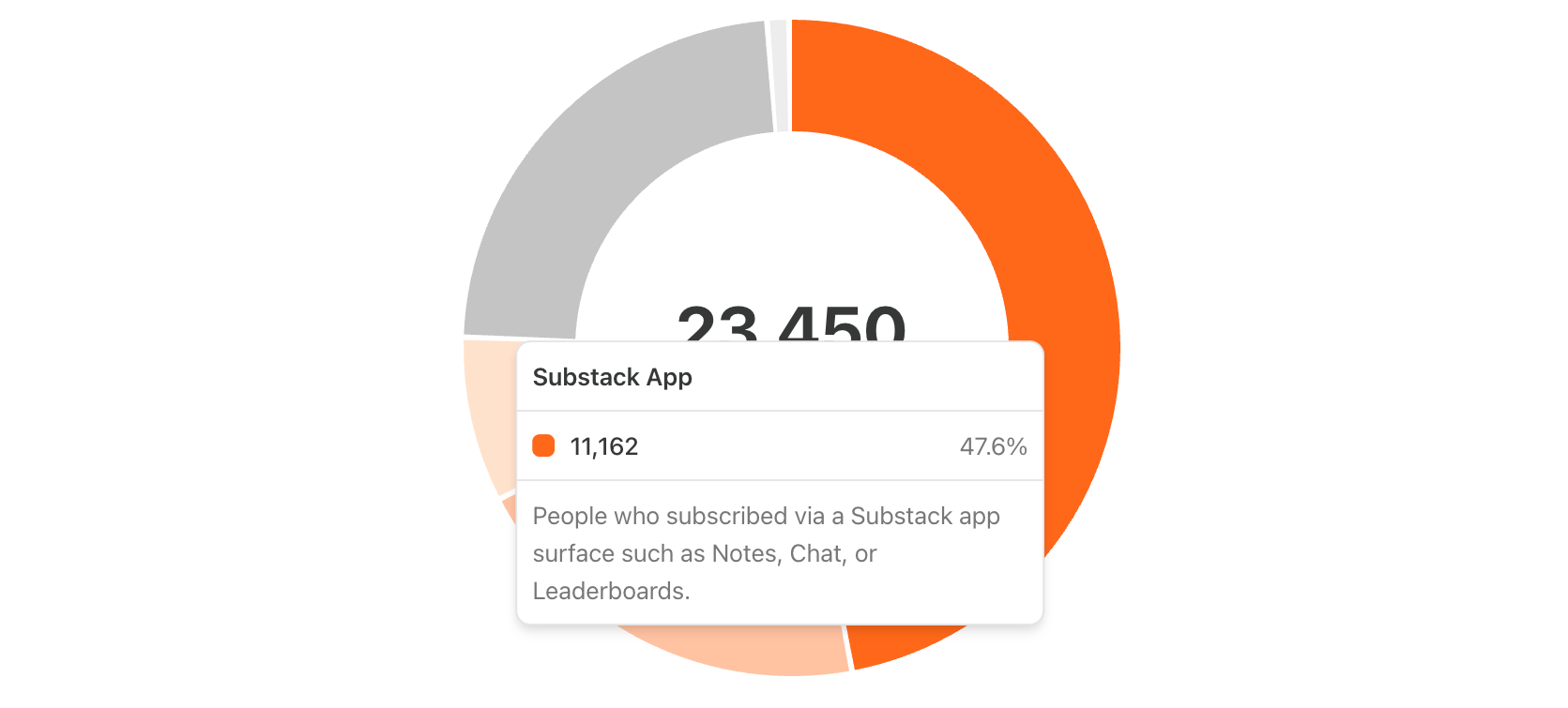
In other words, Notes have an enormous amount of potential for Substack creators - and that’s why we decided to create this Substack Notes Playbook.
In this detailed guide, we’ll cover exactly:
How to write engaging (and viral) Notes
The 6 different types of Notes to publish
How to make writing Notes a lot easier
How often (and when) you should publish Notes
The most common mistakes with Notes
Copy-paste tactics to get the most out of your Notes
All in all, you’ll have everything you need to start writing Notes that attract new subscribers, build your brand, and grow your Substack publication.
The Big Misconception About Substack Notes
Written by Orel Zilberman.
Most creators see Notes as yet another feed. Sort of like a different platform that’s separated from their newsletter. Perhaps even something optional.
And look, it might be. If you’re here just to share your thoughts and stories on Substack in the form of articles, by all means.
The beauty of Substack is that it’s a platform that fits every type of creator.
But if you’re seriously looking to grow your audience, writing Notes is one of the best strategies.
“Notes are like tiny ads. And you get the chance to show those ads, for free, to millions of readers. Use this power wisely, and the rewards will be immeasurable”
- Darius Bashar
(slightly dramatized by me, but still true.)
Notes on Substack are nothing like tweets on X.
When you tweet 50 times a day on X, you might get a few followers. And those followers are vanity metrics.
Why? Because if you get banned on X, you lose everything.
On Substack, every subscriber you earn through Notes is yours. They’re on your email list. It’s an audience you actually own.
You create something independent of any social media platform.
Why Substack Notes Work
Written by Orel Zilberman.
I want you to think of a creator that you admire. Someone who writes about things that interest you.
Then I want you to think about this:
‘Would you prefer reading one weekly newsletter from that person, or, in addition, getting tiny bits and pieces of their life and what interests you every single day?’
I am going to bet you’d pick the latter.
When you put out daily Notes, you’re making people more familiar with you.
You make them feel closer to you.
They will understand your message, mission, and values better.
And by that, you tighten your community.
But if that didn’t convince you, here are three other reasons why Substack Notes work so well.
Reason 1: Increase Your Chances of Exposure
When you put out one article a week, that’s one chance per week people from outside your list will read it, and hopefully, subscribe to your newsletter.
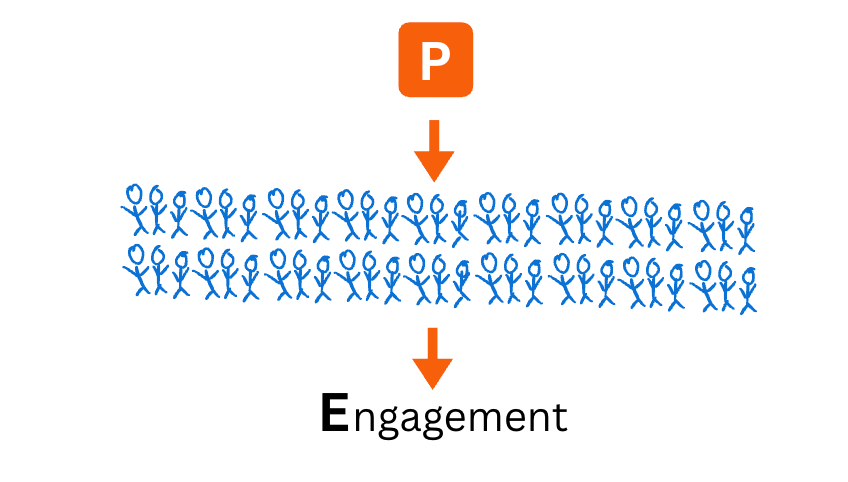
Awesome! But, you’re leaving a lot of engagement on the table.
Because every Note you publish is one additional chance to expand your reach. One additional chance to attract new readers.
So, if you publish between one and five notes per day, that’s 7 to 35 extra chances per week to expand your reach and find more potential readers.
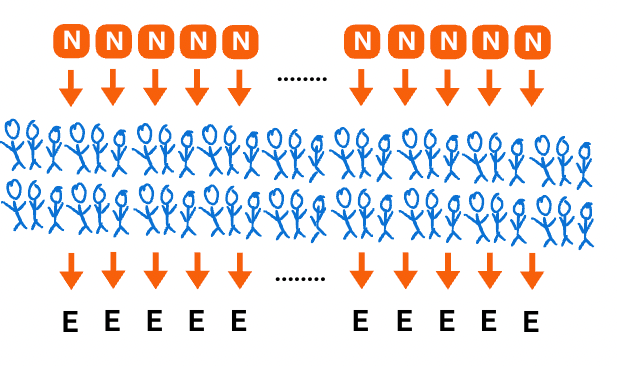
Crazy, isn’t it?
Reason 2: Become an Authority In Your Niche
When you consistently share tips, insights, and strategies about your topic, people start seeing you as the go-to person in your field.
That’s where Notes become incredibly powerful.
Because they’re so quick to write, you can publish multiple Notes a day around your area of expertise - which means you build authority fast without spending hours creating long-form content.
Reason 3: It’s a Great Strategy For Subscriber Growth
The most obvious reason to start writing Notes is that it’s one of the best ways to grow your list.
Many of the big Substack creators report that 30 - 60% of their entire list comes directly from Notes.
And what directly means is that people click the ‘subscribe’ button on the Note they read. Now think about all the readers who read their Note and subscribed in one of the many other ways.
If I had to give an educated guess, based on thousands of creators I talked to, I’d say the numbers are at least 60%.
The 6 Different Types of Notes To Publish
Written by team Write • Build • Scale.
We’ve experimented with many different types of notes, but the six we’re about to share consistently deliver the best results.
These types of notes bring in new subscribers, get more engagement, and even help you land new clients or make more sales.
#1: Educational Notes (Teaching Your Readers)
Educational notes are straightforward and powerful: you teach your readers specific tips, strategies, or insights they can implement to solve a problem, achieve a desired outcome, or overcome a challenge they’re currently facing.
Educational notes work well because people love learning new things, and there’s a lot of value in a note that teaches you something new.
Besides, when you consistently share useful tips, strategies, or insights, it shows your expertise on your topic, and you’ll position yourself as the go-to person in your field.
This is especially important if you sell coaching, consulting, courses, books, or any other digital products.
#2. Inspirational Notes (Motivate Your Readers)
Inspirational notes tend to get a lot of engagement because they appeal to the reader’s emotions rather than logic.
Inspirational notes don’t necessarily teach anything new, but they help your audience change their mindset, overcome limiting beliefs, or motivate them to take action toward their goals.
When you’re able to inspire action or change (limiting) beliefs with your words, you’ll be able to impact your readers at their core, which turns ordinary subscribers into superfans.
#3: Personal Notes (Build Stronger Connections)
People follow you not just because of what you teach, but because of who you are. That’s where ‘personal’ notes come in.
By sharing your behind-the-scenes, personal stories, or things from your everyday life, your readers get to know the person behind the publication, which builds a level of connection that turns casual readers into superfans.
A personal note can be anything from:
A deep, personal story about your life
A recent win or milestone you want to celebrate
A picture of yourself doing something you love
Sharing your transformational journey
A behind-the-scenes of your daily life
That’s what we love about Substack.
It isn’t only about teaching, information, or inspiration. It’s actually a place where you can share more about who you are as an individual.
(Which, in Jari’s case, means sharing a bunch of notes about his dog Bonko.)
#4: Promotional Notes (Turn Readers Into Buyers)
Promotional notes aren’t about growing your audience.
Instead, the goal is for your existing audience to become aware of what you have to offer, so they’re more likely to buy it.
(Whether that’s your paid Substack, coaching program, course, book, or digital product.)
Don’t get me wrong, promotional doesn’t mean ‘salesy’ or screaming at people that they must buy your offer.
It simply means talking about your offers in an authentic way.
It can also mean sharing client testimonials, success stories from people you’ve worked with, or milestones of your own achievements.
This is actually the most powerful form of marketing, as it demonstrates social proof and credibility without you having to “promote” anything.
#5: Feedback Notes (Understanding Your Audience)
What do the most successful Substack creators all have in common? They deeply understand the wants and needs of their audience.
That’s where ‘feedback’ notes come in useful.
By asking your audience one clear, concise question, you’ll better understand their goals, challenges, and desires.
If you post at least one feedback note per week, you’ll gather a ton of valuable insights about your audience, which helps to create content (and offers) that your readers actually want.
Make sure you always ask one clear question per note. Don’t confuse people with multiple questions in one post. Keeping it simple leads to more responses.
#6: Share & Collaborate Notes (Get Your Readers To Share Their Work)
This one’s super underrated, but incredible for engagement.
Share & collaborate notes are designed to get your readers talking about themselves (their goals, challenges, interests, etc) or sharing links to their own work (their Substack, posts, products, website, etc).
These notes are awesome because they:
Get your audience involved (they’re able to share their work, which is free promo for them)
Boost engagement like crazy (because people love sharing their work or talking about themselves)
Help you learn much more about your audience (as they actually share more about themselves)
So, if you want to get more engagement on your notes, come up with a good idea for a ‘share & collaborate’ post.
🧰 Free: Grab Your Substack Starter Kit
The Substack Starter Kit is your shortcut to building a successful publication that attracts readers, earns subscribers, and grows every single week.
It’s a digital toolkit packed with:
✨ Profile optimization secrets
📈 Proven strategies to get your first 100 subscribers
💡 Platform navigation made simple (no more getting lost in the Substack maze)
🔥 Growth tactics the pros don’t want you to know
If you’re ready to turn your Substack into a thriving newsletter with thousands of readers who appreciate your work (even if you’re just getting started), get the Substack Starter Kit for free by clicking the button below:
How Many Notes Should You Post?
Written by Orel Zilberman.
The good news is, you don’t need to post Notes 24/7 to grow. You just need your rhythm
When I started, I posted one Note a day. That was challenging enough for me to take it seriously, but not too overwhelming that I fell off track.
Writing one Note a day helped me go from 20 new subscribers per month to about 50 new subscribers per month.
Then, as I learned more about Notes (and writing them became a bit easier), I picked up the pace and started posting three Notes per day.
That moved my subscriber growth up to 150+ new subscribers per month.
Since a few weeks, I’ve been writing five Notes a day, but it’s still too early to tell the effect it has on my subscriber growth.
But ultimately, what matters most is that you find a rhythm that works for you, and that you can stick with for long enough.
How To Effortlessly Publish 1 - 5 Notes A Day
Written by team Write • Build • Scale.
Consistency is key if you want your Notes to get a lot of engagement and bring in many new subscribers. Posting a Note every now and then isn’t going to do much.
But consistently posting Notes can be a challenge. Here are five effective methods that will help you easily publish between one and five Notes a day.
Let’s dive straight in.
#1: Batch Produce Notes
Some days, inspiration just isn’t there - and it’s a struggle to come up with an idea for a Note. That’s why I recommend batching Notes in advance.
Here’s how I do it:
Step 1: Schedule a 60-minute block once a week (usually on Monday)
Step 2: Sit down and grab a cup of coffee (this is an essential step)
Step 3: Write between 20 - 30 Notes (so I have enough for 1 - 2 weeks)
Step 4: Save them in WriteStack
Step 5: Schedule them in WriteStack
If you don’t batch-produce your Notes, it becomes another task on your daily to-do list, which is a recipe for failure.
#2: Don’t Overthink It
Your Notes don’t have to be groundbreaking or mind-blowing. If you have an idea for a Note, just post it.
Don’t overthink it.
Don’t try to perfect it.
Don’t worry about what others will think of it.
Just post it.
Some of my best-performing Notes were so simple I almost didn’t publish them (like the ones below).
So if you have an idea for a Note - no matter how simple - just get it out there. Don’t talk yourself out of posting it.
#3: Repurpose Long-Form Content
If you’re already writing long-form posts, you’ve got a treasure trove of content just waiting to be turned into Notes.
Writing a long-form post takes quite a lot of time, so take advantage of all the effort you put in. Repurpose some of the best snippets, quotes, and insights from your long-form post and turn them into Notes.
No need to make things more difficult for yourself.
#4: Restack Notes Of Other Creators
Restacking is truly a win-win situation. It’s an easy way to publish a Note yourself while, at the same time, promoting the work of another creator.
When you restack a Note, always add your own thoughts, insights, or message to it. Otherwise, it won’t do much for your personal brand or Substack growth.
#5: Repeat Your Best Ideas
You don’t have to come up with brand-new ideas every day. In fact, if you find an idea or topic that resonates with your audience, keep bringing it back.
Double down on it.
This works because:
A large portion of your audience likely never saw the original
Readers rarely remember past posts word-for-word
Repetition = conviction in your message
Strong ideas stay strong over time
Even if people have seen the original, it’s a great reminder for them
When we say to repeat your best ideas, this doesn’t mean you just copy-paste your old Notes (even though you could), but it means you:
Reframe the idea with a new example or story
Update the wording or format to keep it fresh
Approach the idea from a different angle (educational, inspirational, case study, deep dive, listicle, etc.)
Finding winning ideas is already a challenge, so don’t make it harder for yourself by constantly trying to find new ideas that resonate.
Instead, double down on a winning idea and turn it into many pieces of content.
The 4 Elements Of Writing Viral Notes
Written by team Write • Build • Scale.
Not all Notes are created equal. Some get a lot of engagement (likes, comments, and restacks) and bring in new subscribers, while others disappear into the void.
So what separates a good Note from a forgettable one?
It comes down to four key elements. Nail these, and your Notes will grab more attention, spark more engagement, and drive more subscriber growth.
Let’s break it down.
#1: Keep It Short
Notes are meant to be quick, snackable bits of content that people can consume in seconds. It’s not an essay (save that for your long-form posts), so keep it short and sweet.
Here’s what that means:
Use Simple Words: No need for fancy vocabulary. Write like you’re texting a friend.
Write Short Sentences: Keep it punchy and easy to skim.
Remove Filler Words: Cut out as many words as possible (without diluting your message).
Below are two examples of Notes that are short and to the point, which leads to more engagement:
To make sure your Note is short and sweet, read it out loud before posting it. If it feels clunky or wordy, trim it down.
#2: Attractive Formatting
Even if your Note has the best content in the world, no one’s going to read it if it looks boring.
That’s why attractive formatting plays a massive role in how much engagement your Note will get.
The right formatting helps to get a reader’s attention and keep their attention.
Here’s how to format a Note for maximum impact:
Use Whitespace: Break up your text so it doesn’t feel like a wall of words.
Add Bullet Points: Bullet points make your content easier to skim. Use them to break down ideas, share lists, or highlight key takeaways.
Use Emojis: A well-placed emoji can attract attention and make your Note feel more conversational. Just don’t overdo it.
Use Bold or Italics: Highlight key words or phrases to draw attention to important points. Use bold if you want to emphasize, and italics to add subtlety.
Below is an example of a Note by Sinem that’s formatted so it captures and keeps attention (bold heading, lots of whitespace, short sentences, etc.).
To check if your Notes are formatted for attention, scroll rapidly through your own Substack account and see which Notes stand out (and why).
#3: Compelling Hook
A great hook grabs attention and makes people curious enough to read more. It’s basically the first thing people see - and it determines whether they’ll stop and read your Note or keep scrolling.
For example, a bad hook would be:
“I’ve been thinking a lot about how to grow on Substack, and I’ve come up with a few ideas I want to share.”
While a much better hook is:
“Want to grow your Substack faster? Here are 3 hacks I wish I knew sooner 👇”
In other words, the goal of a hook is to stop readers in their tracks and make them want to read your post.
If you want to get better at writing hooks, experiment with these formats:
Promise a benefit
“Want to grow your Substack faster? Here’s how I gained 500 subscribers in 30 days.”
Use numbers
“3 simple ways to grow your audience starting today 👇”
Challenge a common belief
“Why consistency isn’t the most important part of growing your Substack.”
Share a bold statement
“Most writers don’t know how to monetize their writing. Here’s what to do differently…”
Highlight pain points
“Struggling to get more subscribers? You’re not alone. Here’s how to fix it.”
Create curiosity
“This one trick doubled my Substack subscribers in a week 👇”
Below is an example of a Note that uses a strong hook, as it leads with a few strong statements about Orel’s personal life that speak to people’s emotions.
To check if your Note has a strong hook, only read the first 1 - 2 sentences and feel whether it pulls you in to read more or not.
#4: Clear Objective
If your Note doesn’t have a clear objective (or message), it’ll feel scattered. Instead, decide what you want your Note to achieve and stick to that objective.
Examples of objectives for a Note could be:
Educate: Share a quick tip, insight, or actionable advice that helps a reader solve a problem or get closer to their goals.
Inspire: Motivate your audience (with a quote or personal story) to get into action.
Entertain: Make your audience laugh or feel other positive emotions.
Social Proof / Credibility: Share a milestone or achievement to show your authority on a subject.
Being Personal: Share something about your personal life to let your audience see the human side of you (instead of just the writer/expert/business owner side).
For example, the Note below has one clear objective, which is to educate people on how to create a profitable mini-course:
Just don’t mix too many objectives in one Note.
For example, don’t try to educate, inspire, and entertain all at once - it’ll confuse your message and dilute its impact.
What’s The Best Time To Post Your Notes?
Written by Orel Zilberman.
This is a topic that many people care about A LOT. But I am going to be a bit of a bummer here and tell you this:
When you first start, timing doesn’t matter at all.
Post them at times that are convenient for you. Don’t try to time it to ‘catch people who come back from work’.
Trust me, it’s hard enough already. Don’t make it harder for yourself.
From an analysis that I made on over 6.7 million Notes, it appears that the best times to post Notes are the absolute worst times to post them for me.

So don’t worry too much about perfect timing. Just focus on consistently publishing your Notes.
Let’s Get Tactical About Writing Notes
Written by Orel Zilberman.
Tactic 1: Generating Note Ideas
If you ever feel like you’ve got nothing to post, you’re thinking about Notes wrong.
Notes are smaller versions of your big ideas.
Here’s where mine come from:
Long-form posts: every newsletter has at least 3–5 potential Notes. I’ll turn each key insight, story, or stat into its own Note from posts that worked well.
Other creators: I read what works in my niche. If someone posts something smart, I might rewrite it in my own words. Not to copy, but to learn how they think.
For example, I love Philip Hofmacher’s Notes. So I occasionally steal ideas from him ;)
Pro tip: I use WriteStack’s save inspiration button to add it directly to my WriteStack to edit it later (writestack.io).

Books and videos: I usually keep notes of books that I read and videos that I liked in my Evernote. Then, I take notes that I loved and change their angle to fit my content.
Conversations: Usually a chat with another creator brings me tons of new ideas.
WriteStack’s personalized AI: WriteStack has an AI that’s tailored to your voice and to what you write about. It was my primary assistant when I first started writing Notes. Nowadays, it helps me come up with new Note ideas.
Tactic 2: Schedule Using WriteStack
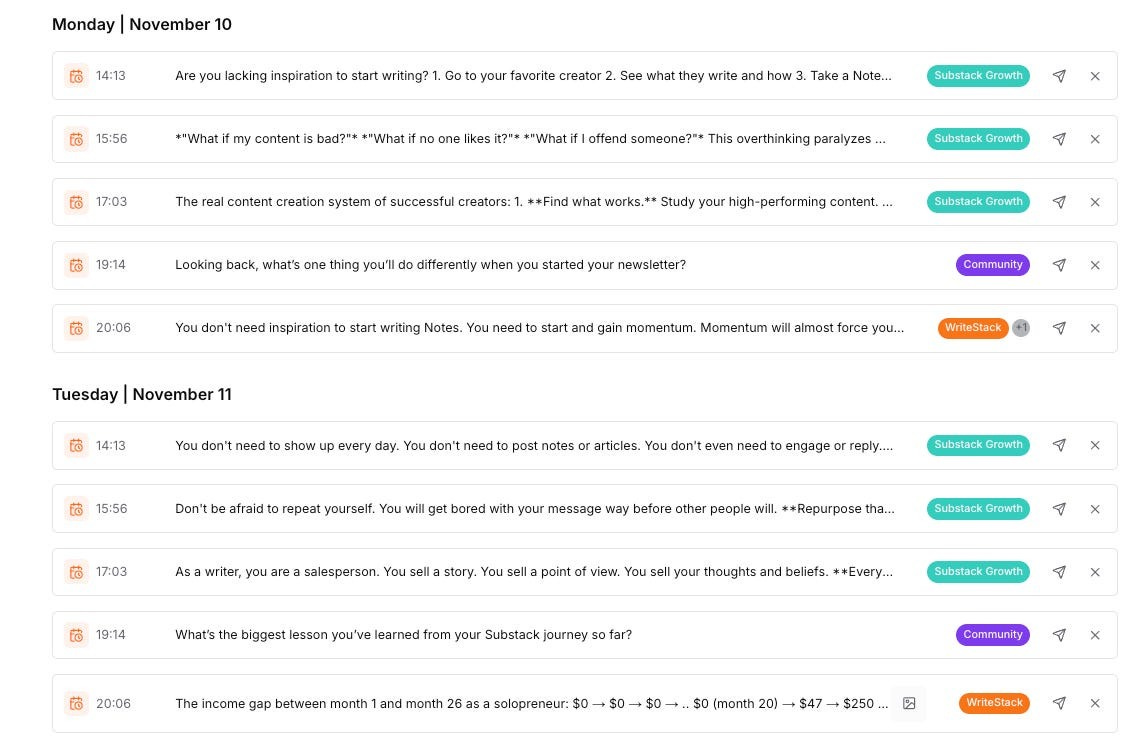
I spend two hours a week writing and scheduling all my Notes through WriteStack.
That’s it.
Each day I aim for:
3 Notes about Substack growth: short, educational, and actionable.
1 “community” Note: something relatable or personal that invites engagement.
1 Note about WriteStack: subtle promotion through transparency or milestones.
Tactic 3: How I Decide What’s Note-Worthy
Honestly, I don’t overthink what’s “Note-worthy.”
I just post whatever feels right. My readers will tell me what resonates through likes, replies, and subs.
Usually, when a Note resonates, it gets more likes than the average Note, more clicks, and a few (or more) new subscribers.
Then I go to WriteStack to analyze which Notes worked best, and I queue them again for one month in the future.
Tactic 4: Comment & Engage
I spend around 45 minutes a day replying to other creators’ Notes and 15 minutes boosting engagement.
I know how annoying it is when your favorite creator doesn’t reply to any of the comments and doesn’t show any interest in you.
So not only do I reply to all comments, but there’s something I spend even more time on; I send a DM to anybody who engages with my content.
This is the best way to create a tight and honest community of people who feel like they can trust you.
Tactic 5: Like Your Own Notes
This one is a weird one, but hella effective.
When you like your own Note, you signal a few things:
You like what you write
You don’t care what others think
Your Note is good enough to be liked by at least one person
Even if you think that someone won’t like it because you liked your own Note, let me tell you something.
Nobody looks at who liked whose Note anyway. So your secret is mostly safe.
P.S. WriteStack has a feature to auto-like Notes that you schedule/one-click post.
If you’re convinced by now that you should start or improve your Note game, WriteStack is your best chance at doing it. Consistently.
WriteStack lets you:
Schedule your Notes
Write or generate Notes in your voice
Have a centralized place from your content
Analyze and see statistics in the most convenient way
Search through tens of millions of Notes to learn what works
If you won’t start today, you’ll look back in a month or two and regret it. Join hundreds of creators who use WriteStack on a daily basis.
Tactic 6: Restack your Notes
This is a tactic that I have recently stumbled upon. 24 hours or so after I publish a Note, I’ll restack it if it performs well.
It usually increases engagement by 10-20%, which is basically free.
Why only Notes that performed? Because that’s what your readers like. There’s no reason to push something they don’t want to read.
Common Mistakes When Writing Notes
Written by Orel Zilberman.
Mistake 1: Thinking People Will Hate What You Write
They won’t. And if they do, who cares?
Here’s a good Note by David McIlroy that will summarize everything for you:
And here’s my motto:
If you write something bad, nobody will notice it.
If you write something good, you’ll get engagement and subscribers.
Either way, you’ve got nothing to lose and everything to gain. Win win.
Mistake 2: Being Afraid to Repeat Yourself
This one probably kills consistency more than anything else.
You think your message sounds repetitive, but it doesn’t. You’re the only one reading all your Notes.
Everyone else catches maybe 1 in 10, if you’re good.
You’re not annoying people. You’re giving yourself way too much credit if you think you do.
Most people don’t care. They read, they engage (or they don’t), and move on.
Plus, most of your readers might’ve missed your original Note. Why not share it again for those who didn’t read it?
Mistake 3: Treating Notes Like an Afterthought
If you treat Notes like a side project, it will show.
You can’t just drop random lines once in a while and expect growth.
You need to treat Notes like a distribution system that can help you spread your message to thousands of new readers.
Heck, it’s the #1 growth engine on Substack. It’s one of the features that make Substack better than any competitor.
Mistake 4: Ignoring Comments
I see this way too often. Especially in medium to big creators with 2k+ subscribers. They put out a lot of content, but hardly reply to any of the comments they get.
I mean, if I see a creator who never responds, I will never engage with their content.
And this is one of the reasons I admire Justin Welsh. The dude has a huge following. But he still finds time to reply to comments on his Notes on Substack.
So if Justin can, what’s stopping you?
Mistake 5: Not DMing Your Audience
This is probably my favorite way to grow a community.
And to my surprise, probably less than 0.1% of the creators take full advantage of it. And that’s a shame.
Sending a DM to someone who engaged with your content goes a long way.
I have met some incredible people and had some fascinating calls about topics I would’ve never talked about anywhere else.
Here’s a first DM you can send, to break the ice:
DM 1:
“Hey NAME. I saw that you engaged with my Notes, so I decided to say hi.”
DM 2:
“How are you doing?”
That will get you like 70 - 80% response rate.
Time To Get Started
If you haven’t started posting Notes yet, now’s the time.
When you post daily, you’re building consistency, trust, and you get crazy exposure that you don’t get anywhere else.
And the good thing is that Substack is still in its early days, and Notes are still extremely underrated by many big creators.
So, don’t wait for the perfect Note or the perfect time to post it.
Just write something, hit publish, and do it again tomorrow. Do it for 52 weeks.
You will thank yourself for doing it.
 | A guest post by
|
Loved this.
Appreciate you.
Took notes.
Don’t want WriteStack (now)
but your soft sell is so appreciated I might later.
You showed me value-first matters.
Thanks!!
Appreciate this helpful post. Thank you so much!