
2 Years on Substack - A Brutally Honest Review
Everything that worked, what didn't, and why it matters

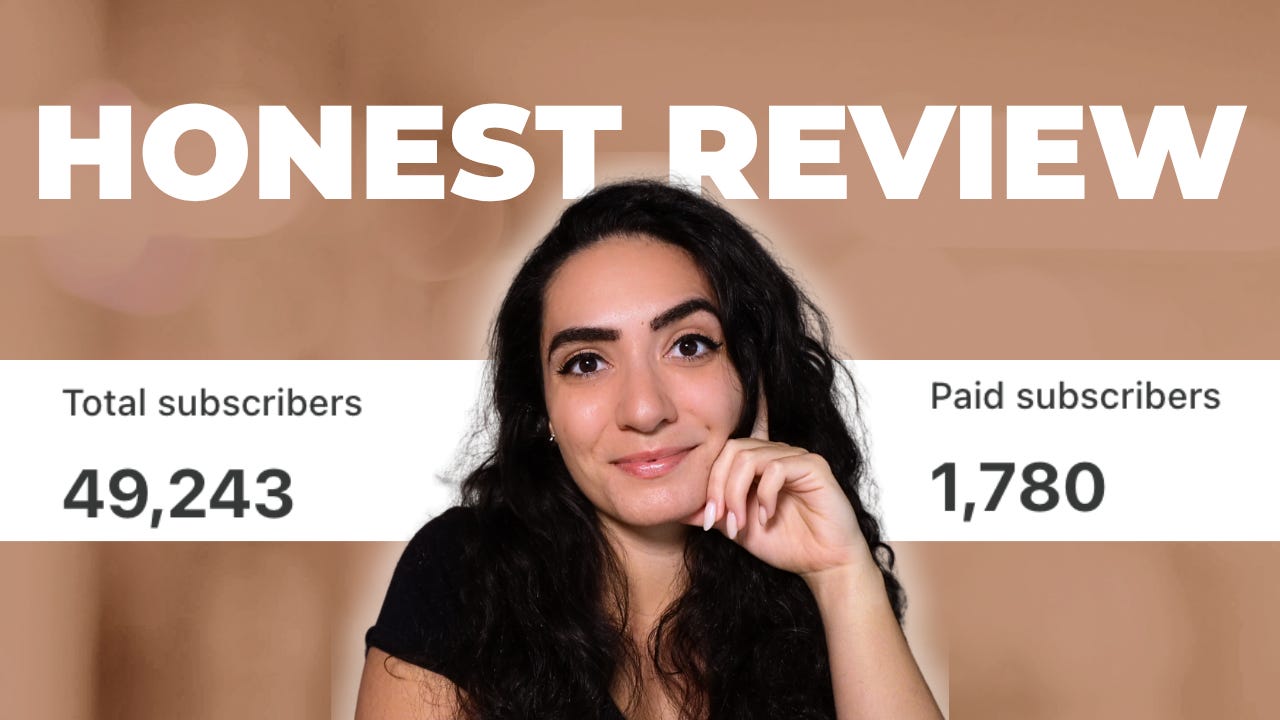
If you’ve been circling Substack for months, reading the success stories, half-believing them, and quietly wondering whether you’ve already missed the window, this is the honest review you’ve been waiting for.
Two years ago, we launched the Write • Build • Scale publication.
Today, almost 50,000 subscribers read what we publish, and over 1,700 of them are on our paid tier.
Let me be honest right away, even if it won't win us many friends: most people get Substack completely wrong, and most of the advice out there is close to worthless.
And it’s not because anyone's lying, but because they treat a complex platform like a simple newsletter tool.
This is our review of what actually works right now, what’s genuinely hard, and who the platform is really for.
Some of our learnings will probably annoy the people still selling you a fake dream, because the real story of building on Substack is more complicated and demanding than the typical highlight reels suggest.
We’ve got nothing to hide here. We’re building and teaching in public, so you see first-hand how we think, work, and coach.
This Is Not the Substack I Joined in 2021
I started my first Substack publication back in 2021. And here’s what makes that detail matter: back then, Substack was barely a publishing tool.
You could write an email, send it to your subscribers, and that was it. No Notes. No recommendations. No app full of different features.
It was a simple newsletter tool.
Look at it right now and you’ll see a completely different universe: You can go live. You can host a podcast. You can run a paid tier, add perks, and offer a high-priced founding member tier.
You can design your publication a dozen different ways, build recommendation networks, run collaborations, and post Notes that reach people who’ve never heard of you.
And that’s the part most people completely underestimate: Substack has quietly turned into one of the most powerful platforms a creator can build on, and one of the most complex.
Powerful and simple almost never live in the same place. So if you’ve got real goals, if you actually want this to become income and not just a hobby, handling all of it well is genuinely hard, especially if you’re not doing this full-time.
Why We Bet on One Platform
Since the platform is this complex, you’d expect the advice around it to be careful and tested, but sadly, it usually isn’t.
Most of the Substack advice floating around comes from people who don’t even do this full-time, sharing tactics they read somewhere else.
Or worse: strategies based on a gut feeling that happened to work once.
That’s exactly why we made the decision that surprised a lot of people: we went all in on Substack.
Frankly, a platform this powerful and fast-moving needs an entire team behind it to support people properly, so they’re not pouring months into outdated tactics or advice that was never proven in the first place.
It’s also why we partner with people like Orel from WriteStack to share data-driven insights with our audience.
The truth is, what worked on Substack a year ago doesn’t always work right now, and the only way to know the difference is to be in it every single day.
Everything we’ve learned over the past two years goes into a free live Masterclass we’re hosting next Tuesday.
Secure your seat right now to join us.
What Two Years on Substack Really Taught Us
So with all of that said, here’s the honest part. Three things we learned that almost nobody tells you upfront.
Nobody Finds You Just Because Your Writing Is Good
The first myth to let go of is that great writing gets discovered on its own.
It doesn’t. Not anymore.
Substack is not a search engine, and talent alone won’t move a single subscriber your way. Distribution will.
The good news is that the platform gives you powerful tools for it:
Notes to reach people outside your audience, recommendations that bring readers to you on autopilot, collaborations that borrow trust from creators your ideal reader already follows.
The catch is that all three take real work and a real strategy, and most people either ignore them completely or use them randomly and then wonder why nothing compounds.
A Bigger Audience Won’t Pay Your Bills
This one stings, so I’ll say it plainly: You don’t make money on Substack by posting articles.
You make money by building something people genuinely want to pay for, and then actively marketing and selling it.
Most people never realize that. They just assume that if they grow the list, the income follows, and then they’re confused when a few thousand free subscribers turn into almost no paid ones.
And here’s the math that reframes the whole thing: You don’t need to go viral, and you don’t need a giant audience.
100 paid subscribers at $10/month is $12,000/year. That’s the Substack Bestseller threshold, and it’s far more achievable than chasing some enormous follower count.
In our upcoming live Masterclass, you’ll learn how to build a Bestselling publication in less than 12 months.
Sign up right now.
Substack Started Rewarding the Same Things Social Media Does
And here’s what’s changed most over the last year: With Notes, Substack is starting to feel more and more like social media.
The scrolling, the likes, the little hit of dopamine when a post takes off. That can be useful, but it can also quietly pull you off course, because the metrics that feel good are rarely the ones that matter.
Follower counts, likes, and viral Notes won’t necessarily pay your bills.
Remember: your job here isn’t to build a following. It’s to build subscribers.
The moment you start chasing vanity metrics, you’ve turned Substack into one more social platform you don’t own, which is the exact opposite of why you came here in the first place.
Who Substack Is Really For, and Who It Isn’t
Two years in, we can usually spot the people who’ll thrive here from a mile away. And we can spot the ones who’ll quit in three months.
Substack is for you if you’ve got real expertise, a genuine message, or a body of work, and you’re willing to show up, market it, and build something over time.
It rewards people who treat it like a serious business asset, not a lottery ticket.
It’s especially powerful if you’re a coach, a consultant, an author, an expert, or any kind of educator with something worth saying, because trust is your currency, and Substack is built to compound trust.
It’s not for you if you want passive income without the work, if you’re hunting for a viral hack instead of a real foundation, or if the idea of putting yourself out there publicly makes you want to close the tab.
The people who succeed here are builders, and the ones who don’t are usually looking for a shortcut that doesn’t exist.
Why We’d Still Choose Substack Every Single Time
After two years of building our audience here and investing the vast majority of our time into the platform, we can confidently say that it was the right choice because engaged Substack subscribers are worth far more than followers on any other platform.
On Substack, you own the relationship. You have the email addresses. If the algorithm changes overnight, or the platform you’ve poured years into disappears, you can take your audience with you. That alone is rare and priceless.
Despite how powerful the platform has become lately, we’re still in the early days.
The discovery engine, the recommendation network, the Notes feed, they’re doing for writers right now what the early days of other platforms did for the people who showed up first. That window doesn’t stay open forever. The people building seriously right now are the ones who’ll look established in two years, the same way we do today.
Two years ago, we hit publish for the first time with no idea where it would lead. Right now, the publication is the foundation of our entire business, and we’re more convinced than ever that the best time to build here is before the rest of the world catches on.
If you want help turning your knowledge into a publication that actually generates income, with a team that does this full-time and nothing else, apply to work with us right now.
Great read. I am not holding my breath for this platform as a means of total income yet. But this is the reason why I started it. I have been living with Severe RA for more than ten years all while working as a power plant operator working a DuPont swing shift schedule. It’s not getting any better and my hands are my hands are wearing down. Good luck all.
This is such a refreshing and grounded take Sinem. There's so much hype around Substack right now - with people treating it like a magic bullet for overnight success, so I really appreciate your honesty about the actual grind involved!