
I've Helped Thousands of Substacks Grow: These 6 Decisions Decide Whether You Become A Bestseller
The exact reframes that make everything easier. ✅

If you’re planning to start a Substack in 2026, or you already have one that isn’t growing the way you hoped, this post is for you.
What separates the publications that take off from the ones that quietly stall is almost never talent, ideas, or writing quality.
Instead, it comes down to six simple but crucial decisions most creators aren’t even aware of.
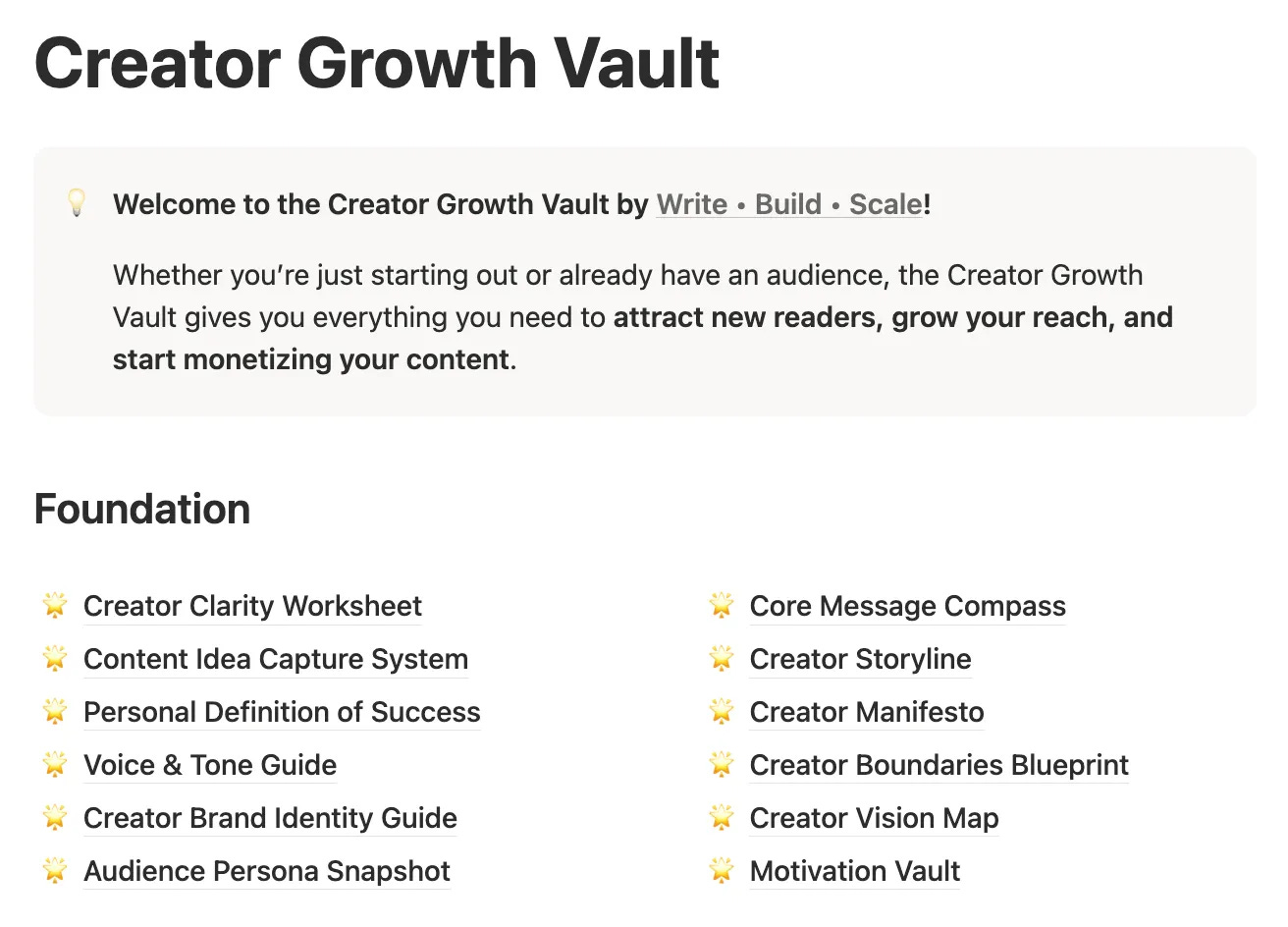
A quick note before we start: The whole article is free to read, and so is the video. But at the very end, our paid members will find a hand-picked set of resources from our Creator Growth Vault, one map for each decision, so you can move from reading to actually implementing this same week.
Decision 1: Stop writing about a “topic”
When asked about their niche, most people answer with a topic.
They say something like “I write about productivity,” or “I write about marketing.” But a topic isn’t a person, and the Substack algorithm can’t match you with a topic. It matches you with readers.
That’s why you want to pick one reader to focus on.
One specific person with one specific problem you can genuinely help them solve.
If you write for that person week after week, the algorithm starts working in your favor: It finds thousands of others who think and struggle exactly like them.
If you run a coaching or consulting practice, that one reader isn’t just a reader, it’s your future client.
The clearer you are about who they are, the faster your publication becomes the front door to your business.
And if you’re just starting out and don’t yet know who you can help, don’t treat that as a limitation. Instead, think of one person you could help right now with what you already know. Often it’s a version of your past self, because we usually understand our audience so well precisely because we’ve been them in the past.
Your topics will expand over time. But for now, treat this as a chance to be focused and sharp. Getting this one right makes every decision that follows easier.

Decision 2: Treat your publication as an entry point, not the final destination
Once you know who you’re writing for, the next question is what you’re actually building. Most creators get this wrong because they think their publication is the final destination.
Your Substack publication is where readers find you, learn to trust you, and eventually invest in your work at a deeper level. It’s the front door, but it doesn’t have to be your entire monetization strategy.
That single reframe changes what you publish and how you think about money from day one. You stop treating every post like it has to pay you directly, and you start treating every post like the opening line of a relationship.
If you’re in your early days, this should take some pressure off. You don’t need to monetize everything in week one.
If you already run a coaching, consulting, or expert business, the game gets even more interesting. Your free publication becomes the one thing that can fill your coaching offers, cohorts, courses, and any other product or service you sell.

The creators who miss this end up in a content hamster wheel: Publishing endlessly, stacking paywalls out of habit, and never reaching enough of the right people to make any of it pay off.
Decision 3: Publish before you feel ready
Here’s a harsh truth you may not want to hear: Perfectionism kills more publications than bad writing ever will.
You redesign your logo. You rewrite the About page for the fifth time. You keep telling yourself you’ll launch once everything feels ready, but that day never comes.
If you have high standards, or you lean even slightly perfectionist, you’re never going to feel ready. Instead, you’re just keeping your best ideas hidden from people who might desperately need them right now.
Remember: Your first few posts don’t need to be your best work.
They need to do one job: Show a new reader that you understand their problem and can genuinely help them solve it. A handful of articles that each teach one specific thing will always outperform one perfect piece nobody finds.
If you’re already an established expert, this can be harder. You have a reputation. You don’t want to put anything out that feels less than polished. But the same rule applies to you as well: Your readers don’t need perfection. They need to feel understood, and they need proof you can help them.
Publish the posts that show people you’re worth subscribing to, even if the publication doesn’t feel perfect on your terms yet.
Decision 4: Pick one growth engine and run it every week
Getting posts out the door is one thing. Getting them in front of the right readers is another. Most beginners think this part is impossible when they’re starting with no audience. It isn’t.
Substack has two engines that work with zero audience. You don’t need both running perfectly from day one. You need one running deliberately every week.
The first is Notes. Notes are Substack’s short-form feed. Think of them as short posts, sometimes just a sentence, shown to readers well beyond your subscriber list. When a Note resonates, the reader can subscribe to your publication in one tap. It’s like posting on LinkedIn, X, or Instagram with an instant button to grow your email list.
The trap is treating Notes like a game of likes. Show up consistently with short, genuinely useful thoughts that pull the right readers back to your publication. A Note with a thousand likes from people who’ll never care about your work isn’t helping you. You want the right readers, not just big numbers.
But showing up on Notes every single day can feel like a massive burden, especially in the early months. That’s why we built our 365 Substack Notes Templates, so you never have to invent a Note from scratch again.
The second engine is recommendations. Other publications point their readers toward yours. Over 800 publications now recommend our work, which has sent more than 10,000 subscribers our way. But we didn’t sit down and pitch 800 creators one by one. We built genuine relationships with a few dozen we truly respect, and the effect compounded from there.

So keep this simple. Focus on a handful of strong relationships with creators whose work you actually vibe with, and let it grow from there.
Pick the engine that feels most natural to you right now, and start there. Let it compound.
Decision 5: Get paid to lead somewhere, not just to write more
With growth handled, the money question is the one that reframes everything else.
At Write • Build • Scale, paid subscriptions are less than 10% of our total revenue. Our publication with almost 2,000 paid members isn’t the main money maker. It’s a lead generation machine. Once that clicks, your whole relationship to money on Substack changes.
If you’re just starting, this should take pressure off. You don’t need to turn on paid subscriptions in week one, or even month one. You turn them on once you’ve earned real trust.
And when you do, your paid tier has to feel like an actual product with a clear transformation. Not just the same free content sitting behind a paywall. People pay for a result. They don’t pay for more words in their inbox.
If you already have expertise, this is where it gets really interesting for you. Your free publication becomes the top of a funnel that leads to the work you actually get paid well for: Coaching, consulting, courses, cohorts. When you approach Substack with a clear sense of how it fits into your business model, the return on your time and energy stops being a gamble.
Decision 6: Decide what you refuse to do
This one almost nobody talks about, and it might matter most in the long run.
You can build a Substack that grows and still end up trapped by it. Publishing constantly. Chasing every new feature. Running on empty. Slowly starting to resent the very thing that was supposed to give you freedom.
So think about what you’re not willing to do. A publishing frequency you won’t push past, even in a good week. A comparison you won’t indulge, because someone else has been in the game for years and you just started. The content you won’t write just because it might go viral, even though it has nothing to do with the readers you actually want to reach.
The creators still here and still thriving 2 years from now aren’t necessarily the most talented. They’re the ones who built something they could sustain. Something that gave them freedom instead of quietly taking it away.
The bigger picture
Get these six decisions right and starting a Substack stops feeling like a gamble. It starts feeling like something completely doable, especially with the right system and the right support around you.
If you already run a business or a coaching practice, and you’d rather not spend the next year figuring Substack out by trial and error, that’s what we built the Substack Accelerator for. It’s direct coaching from the Write • Build • Scale team, applied to your specific publication, built around one outcome: Becoming a Substack Bestseller and building real income on top of it. It’s application-based, because we only take on people we’re confident we can get there.
If that sounds like you, apply here: substackcoaching.com
For Our Premium Members Only: The Creator Growth Vault Implementation Kit
The six decisions above are useless if you don’t actually implement them.
That’s what our Creator Growth Vault is for.
Below is a hand-picked list of vault resources mapped directly to each decision in this post, so you can stop reading about growth and start building it into your publication this week:
Keep reading with a 7-day free trial
Subscribe to Write • Build • Scale to keep reading this post and get 7 days of free access to the full post archives.